Thirty Six Thousand

Thirty Six Thousand

A picture is worth a thousand words. A roll of film is worth a novel.

    • About
  • Art Photography

    Art Photography
    What is art?

    August 9, 2025
    Equipment: Nikon Zf, NIKKOR Z 50mm ƒ/1.8 S
    Location: London, UK

    Last weekend, I joined some friends in visting the Victoria & Albert Museum here in London. We were there for a special exhibit on the art of Cartier jewelery, which promised alluring opportunities for creative shots of the pieces on display. But in doing so, I was confronted with a thought – when does the photography of someone else’s art become my own art?

    We started the day in the V&A’s cafe, which in and of itself is very much part of the museum’s exhibits. The stunning Victorian architecture, with its gilded facade, stained glass windows, and juxtaposed modern chandeliers, is art in and of itself.
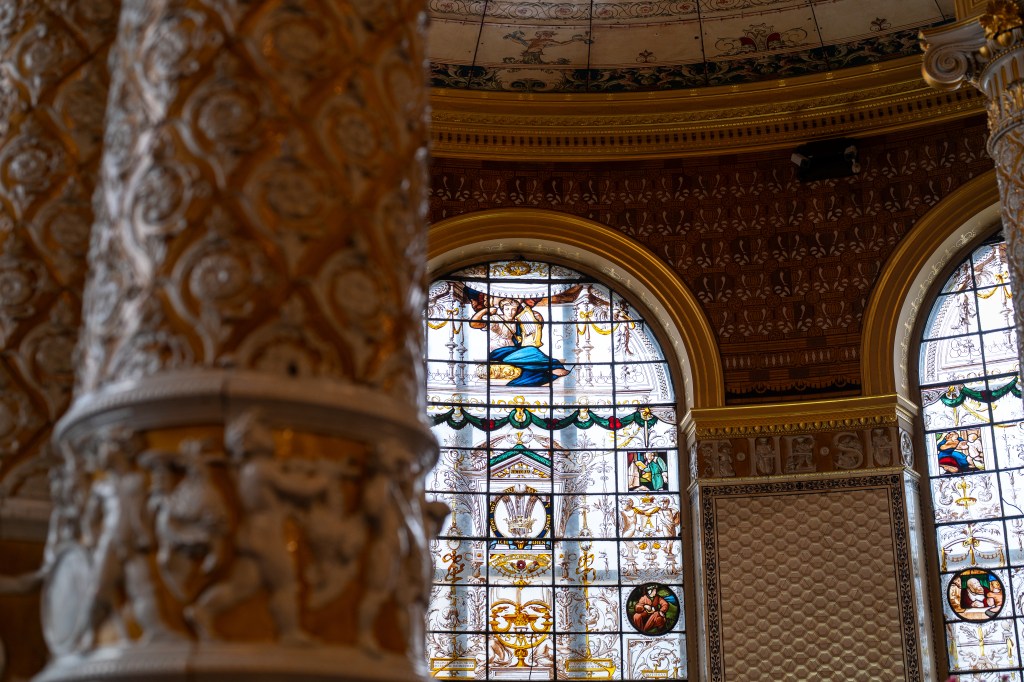
    View of the V&A cafe’s stained glass window
    ISO 180 | f/3.2 | 1/60

    Architecture and interior design, like photography, are practical art forms. Their intrinsic purpose is not artistic. The purpose of a chandelier first and foremost is to create light. The purpose of the V&A’s impressive building is to house art. The purpose of a photograph is to reproduce for you, the viewer, an image from the past.
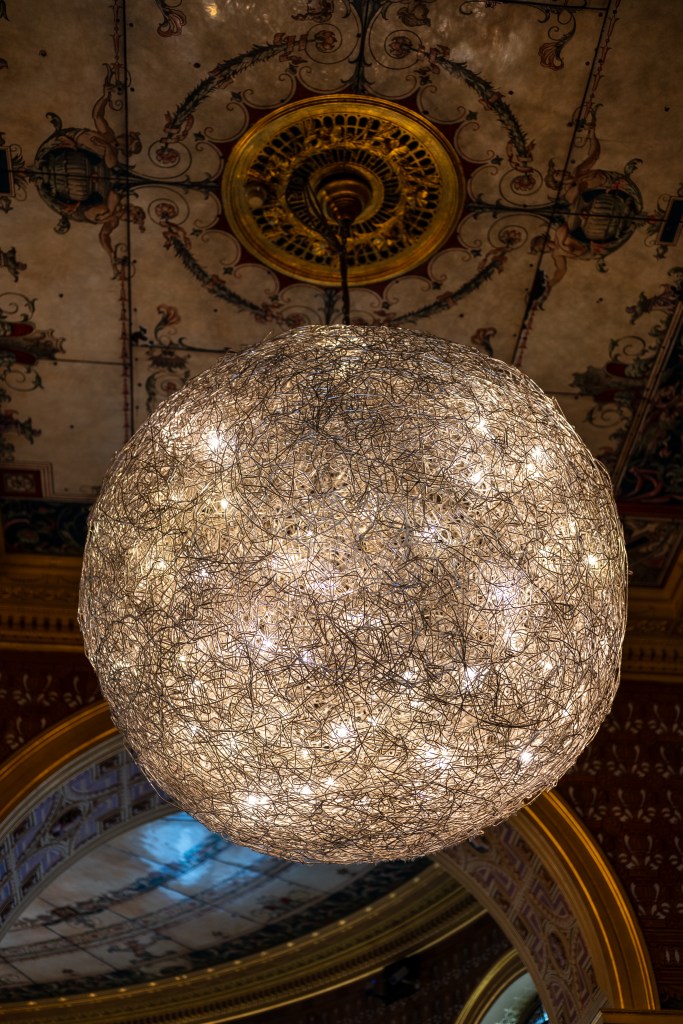
    A faithful reproduction of what the V&A cafe’s chandelier looks like
    ISO 160 | f/2.0 | 1/60

    But these chandeliers, the stanied glass window above, and the V&A’s architecture – they go beyond their purpose. Their aesthetic beauty evokes an emotion. Is that then what makes art, art? An emotional connection beyond the practical purpose?

    As we walked through some of the permament exhibits, I started taking my first pictures of the actual museum exhibits (i.e., the “real” art on display). I contemplated if what I was creating here was a mere practical photograph, a reproduction of someone elses’s art, or if I was creating art.
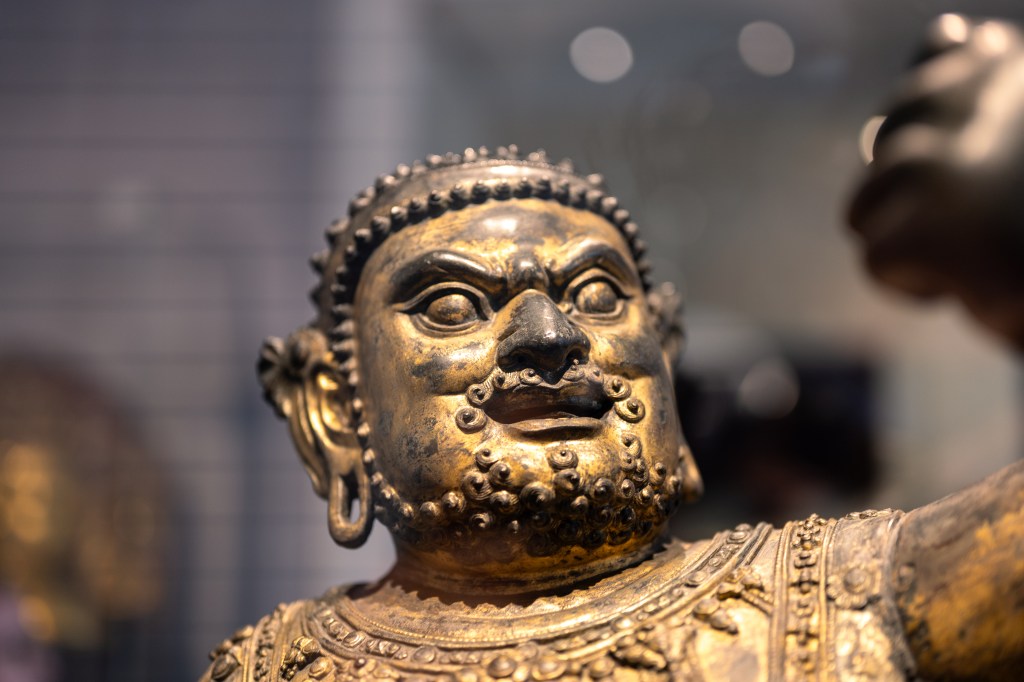
    A statue of the yogi Virupa. Art or reproduction?
    ISO 220| f/1.8 | 1/60
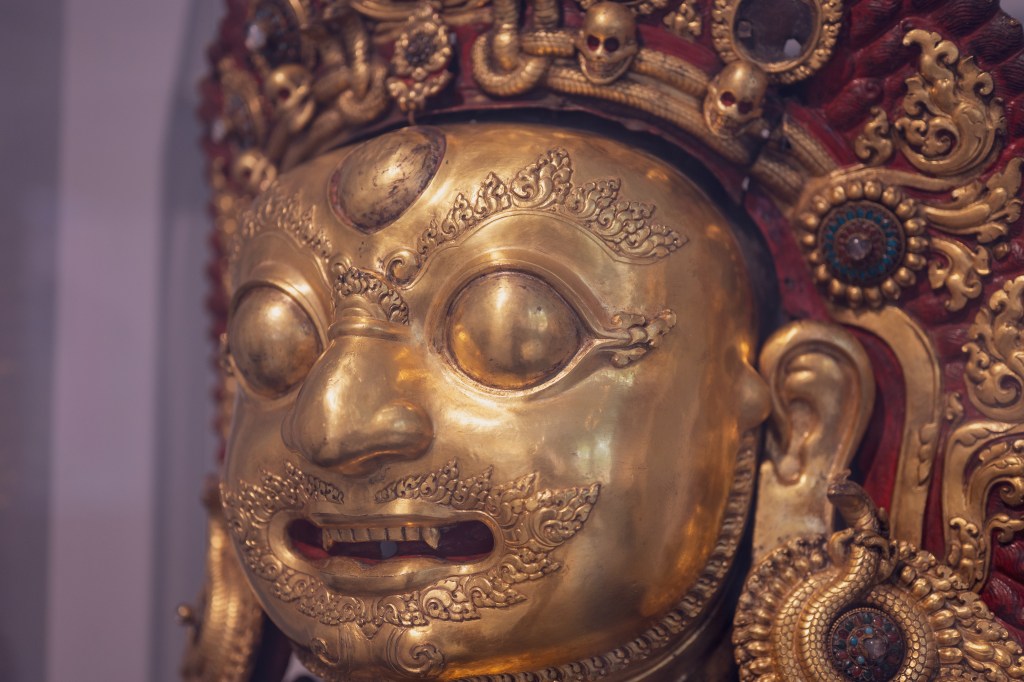
    A statute of Kala Bhairava. I found this statue a bit creepy, so the close zoom and somewhat tight framing was intentional here – aimed at making the viewer similarly uncomforable. Does that make this art?
    ISO 250 | f/1.8 | 1/60

    We meandered through Southeast Asia and made our way to the Maison Cartier. This, truly, was the crown jewel of our cultural day out. Each exhibit outdid the one before it – diamonds sparkled under the museum lights, rubies and pearls shaped meticuslously into playthings of Queens and Emperors. These were difficult subjects to photograph. The lens I chose to bring was not a macro lens, and the reflections in the exhibit glass did me no favors.
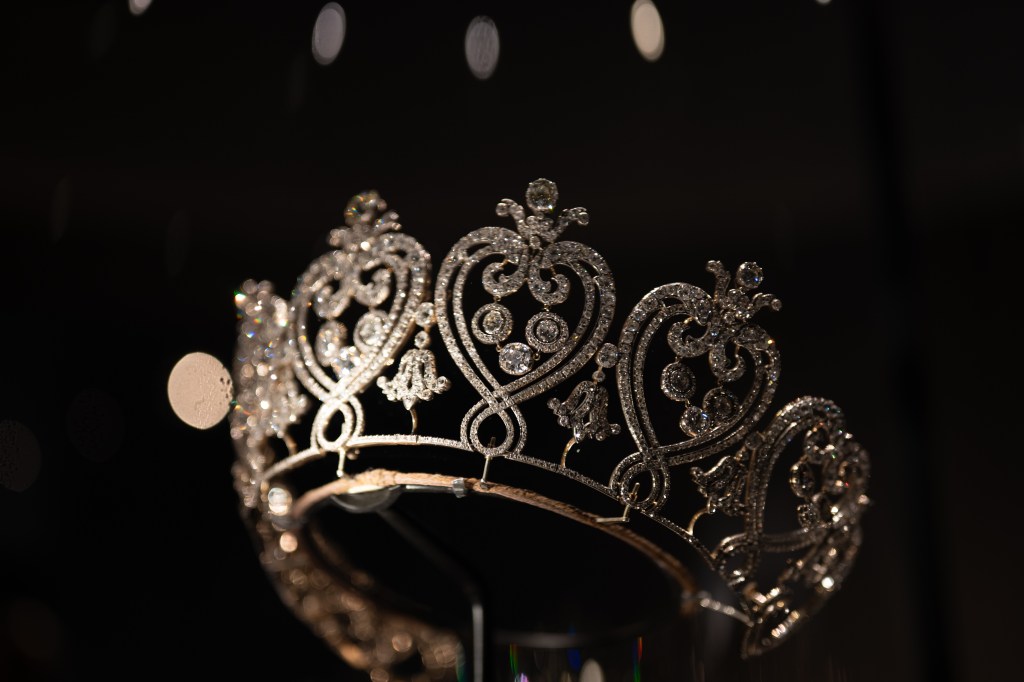
    A royal tiara, slightly out of focus
    ISO 280 | f/1.8 | 1/60

    Other photographs came out quite nice, reproducing in great detail the cratsmanship on display.
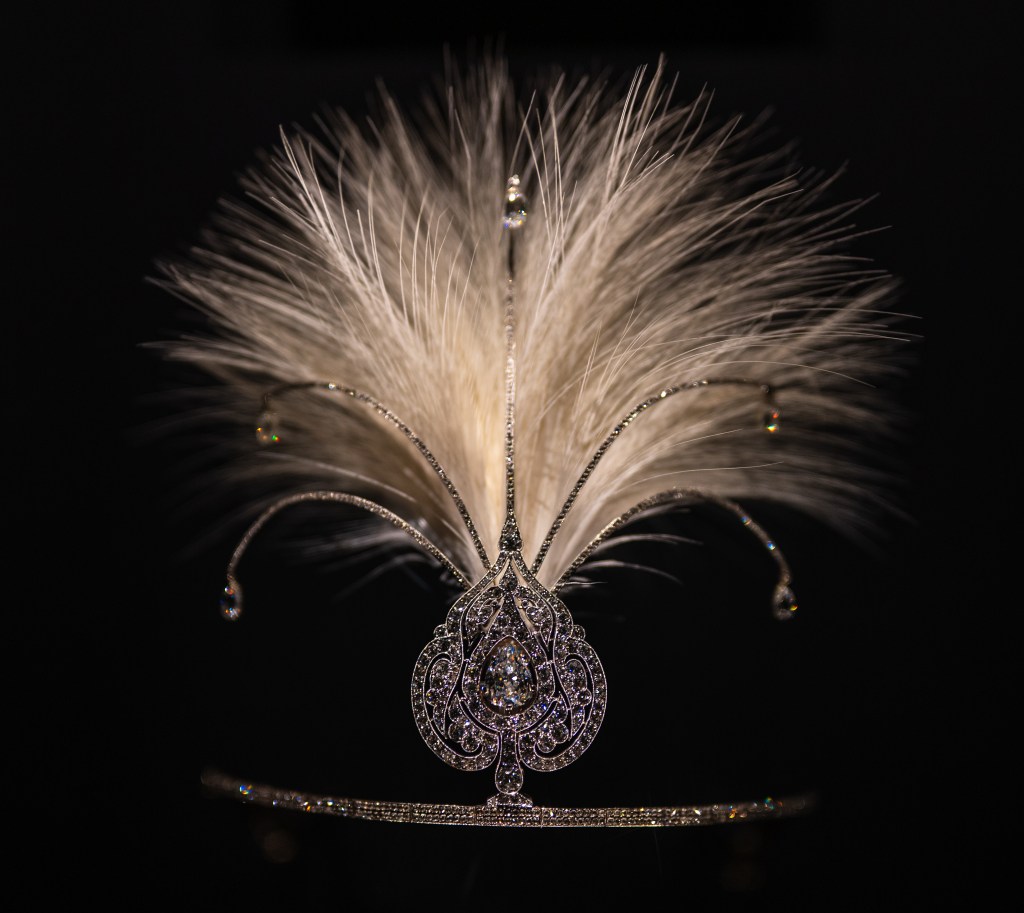
    Another tiara, this time in focus and with special attention to the sparkle of the diamonds reflecting the blue-tinted exhibit lights
    ISO 560 | f/1.8 | 1/60

    But the exhibition highlight for me was a bejeweled golden brooch of a panther displayed against a white forest backdrop. Not only was the pin an exquisite piece of jewelry, but the forest backdrop made it seem like the metal panther was alive, moving among the trees.
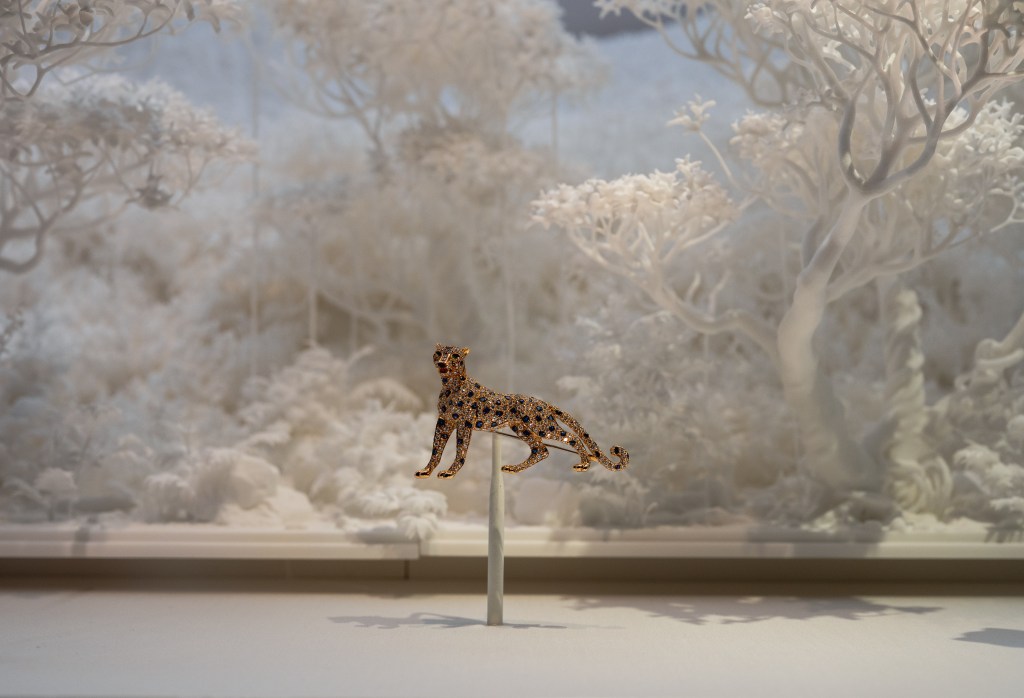
    Panther brooch and the forest backdrop.
    ISO 500 | f/5.6 | 1/125

    This, to me, gave a definitive answer to my opening question. This was not a reproduction – the photograph tries to evoke a supplemental feeling than just the beauty of the photographed art. It’s the new perspective that’s being created that makes this not just a faithful reproduction of the exhibit, but a new creation (unless, of course, this feeling is what the museum curator meant to create, making this just a reproduction of their artwork of art.)

    Whatever the case may be, the V&A convinced me that taking pictures of art can be art itself – just like the building housing the art can be art as well. The key is the intentionality of the image, and the emotion it tries to ellicit that goes beyond simply showing the viewer what the phographer happened to see the moment they pressed the big red button.

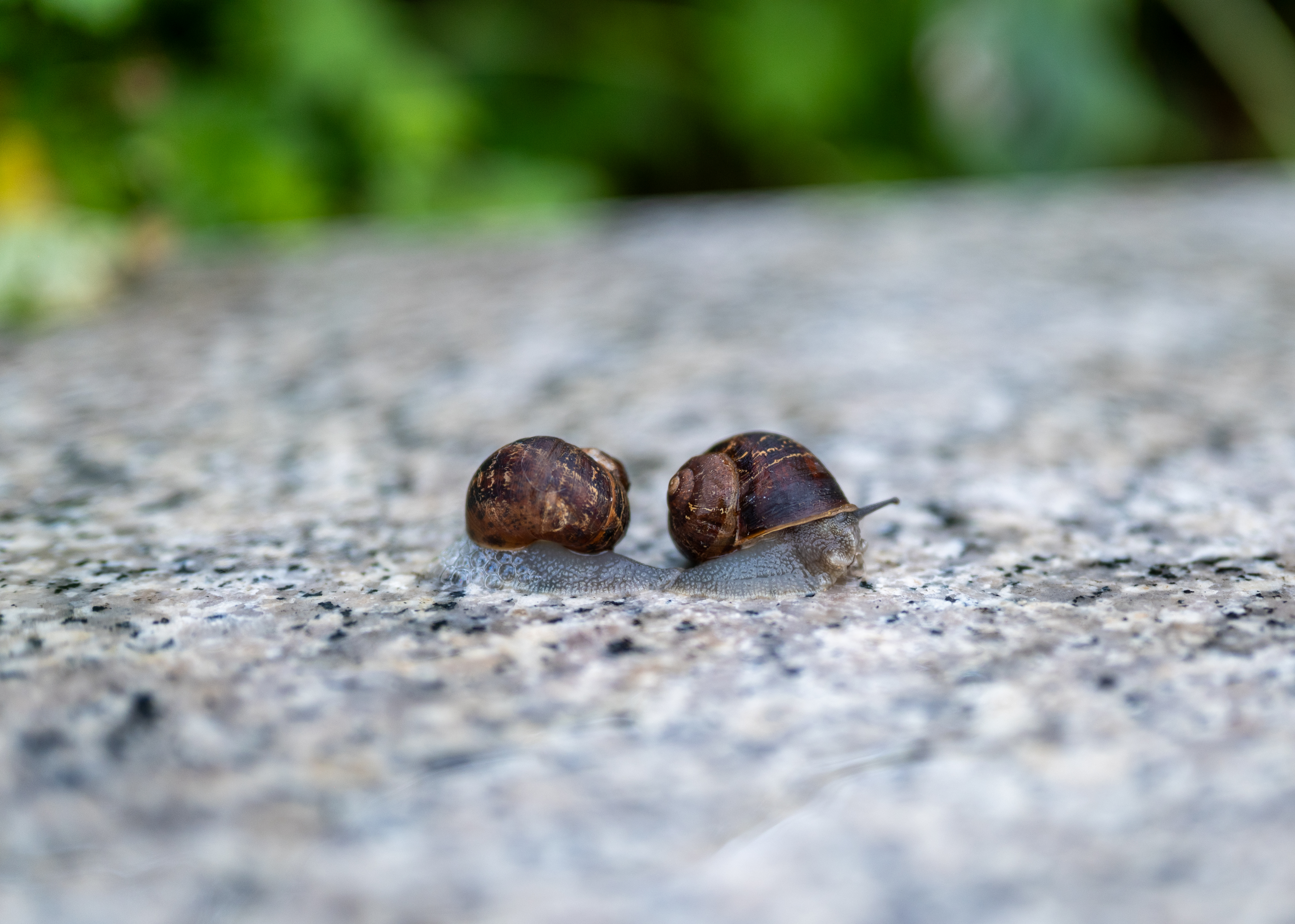
    More art?

    Enzo Paganetti

    August 11, 2025
    Uncategorized
    art, europe, history, photography, travel
  • Film and Growing Older

    Film and Growing Older
    What is art?

    July 27, 2025
    Equipment: Leica II, Hektor 5cm ƒ/2.5 | Ilford FP4 Plus, ISO 125
    Location: London, UK

    It’s my birthday next week. I’m turning 26, and I’ll admit it’s snuck up on me. Gone are the days I lay awake in anticipation days before my birthday. Part of that lies in the fact that I’m no longer getting a pile of Legos as a birthday gift, no doubt. But it’s also in no small part rooted in an anxiety about the future, a nostalgia over my bygone (but not too-distant) childhood, and a healthy, yet apprehensive, appreciation for the inevitable march of time.

    Age, albeit not my own, was at the forefront of my mind while I was out with my camera this past weekend. The Leica II I was shooting with is 87 years old (the lens is a bit older still – the serial number suggests it was among the first batch of Leica’s screw mount lenses made in 1931). It is as much a piece of history as it is a camera.

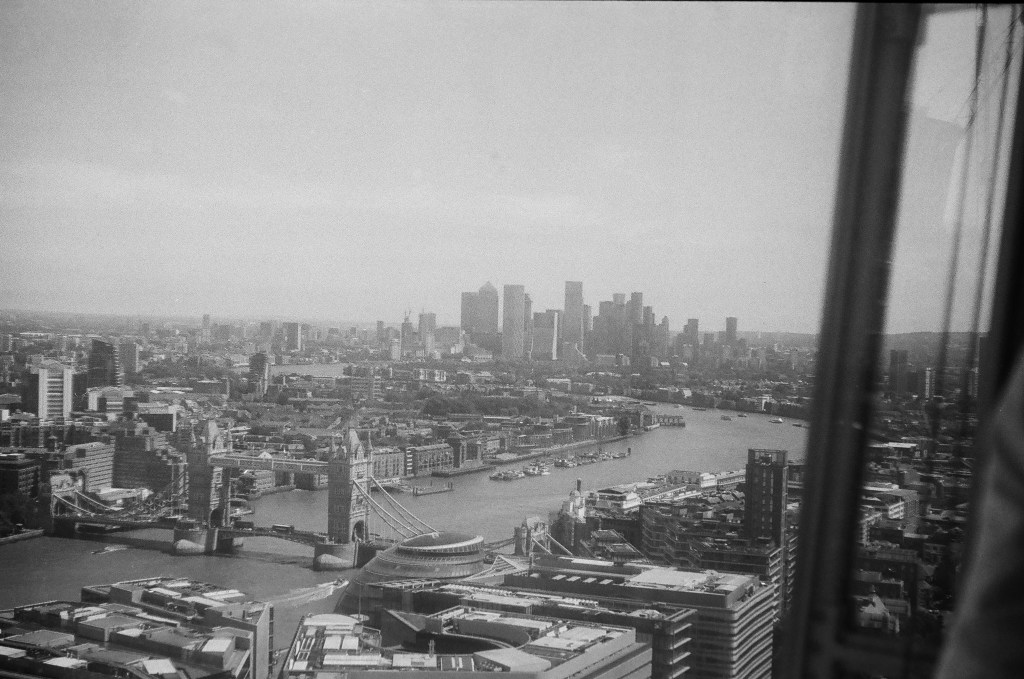
    Looking towards Canary Wharf and the Docklands. Given this camera’s age, it may have taken a similar picture of London ablaze during the Blitz

    Taking photographs with a museum piece is no easy feat. For starters, the film must be loaded from the bottom. This is an awkward operation, involving trimming part of the film strip so it aligns smoothly inside the camera. The Leica II has a limited range of settings available – you’re mostly limited to taking pictures in broad daylight, and the camera doesn’t have a light meter to tell you if the lighting conditions are sufficient to take a good picture. Keeping the lens pointed at the sun for prolonged periods of time runs the risk of the lens focusing sunlight inwards, like a magnifying glass, thereby burning a hole in the camera’s delicate cloth shutter. Unlike modern lenses, this lens is not UV-coated and not optimized for color photography.

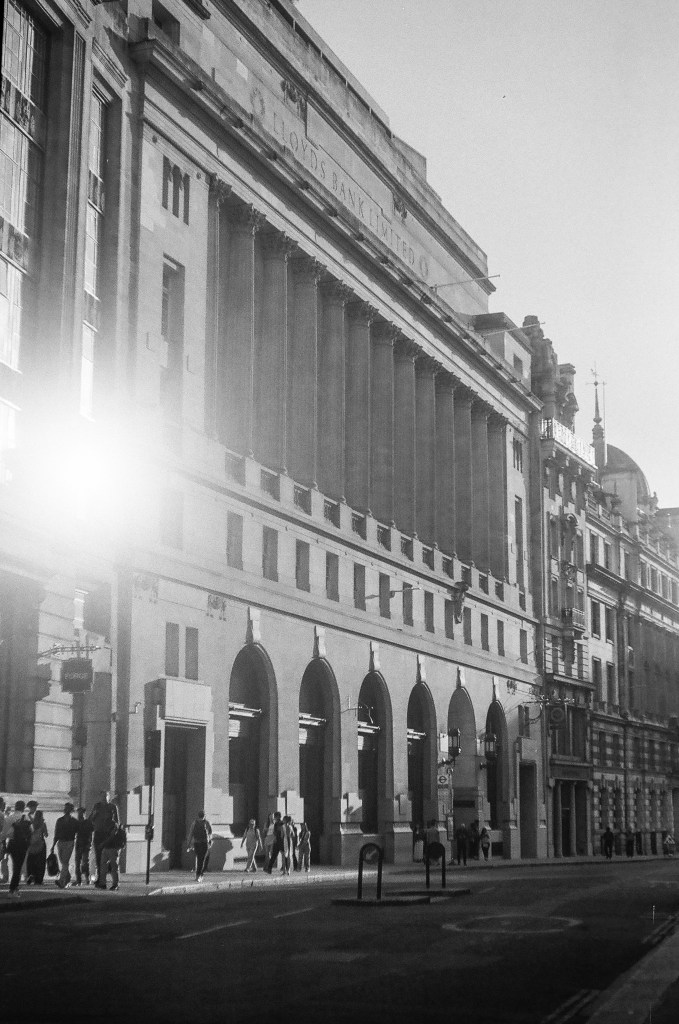
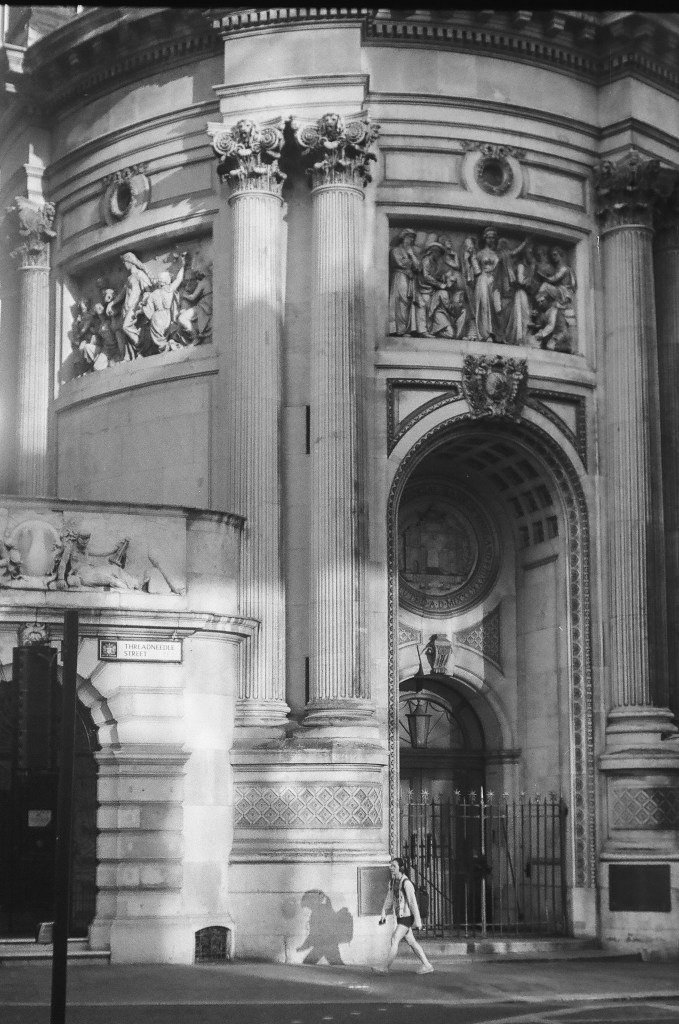
    The Banking Hall on Cornhill. The 94-year-old uncoated Hektor lens struggles with reflected sunlight, leading to a strong glare

    Even if you get the exposure just right, the Leica II is a very slow camera. It requires forethought, deliberation, and patience to operate. Needless to say, the camera offers no auto focus. I’m often not fast enough to compensate, leading to missed moments.

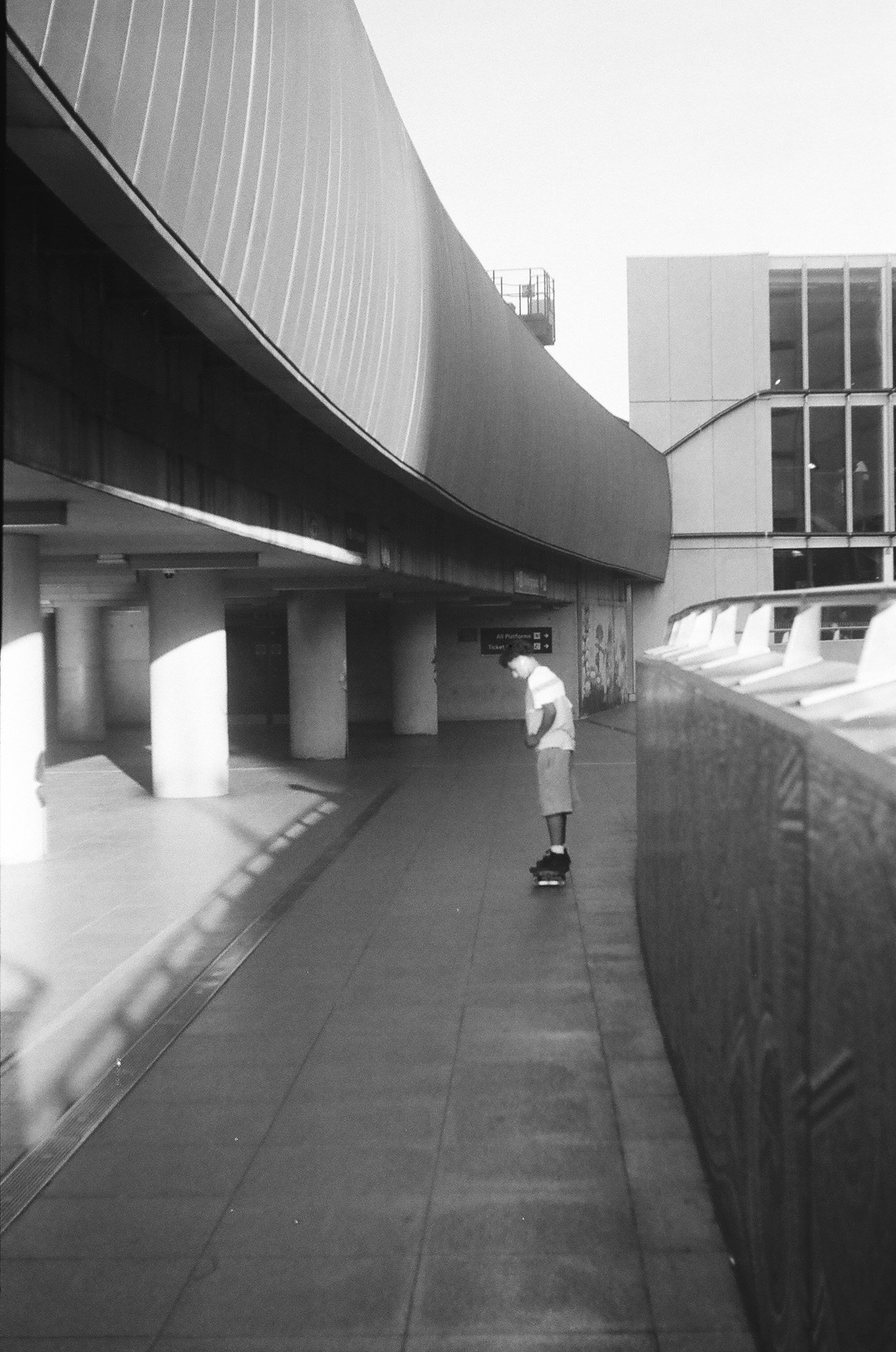
    Right, by the Leather Exchange on Weston Street. The family had been walking in a light pocket with great contrast, but by the time I lined up my shot they had walked into the shade. I’m still happy with the photo, but the moment I saw when I decided to capture it, and the image I had in mind, would have been an improvement. To the left, a skater practices on the approach to London Bridge Station. I tried to get an action shot of him in motion – a jump, maybe, or an ollie – but again, I couldn’t get the moment right.

    So okay, we’ve established that shooting with an old camera is difficult, slow, and often frustrating. So why put up with it? Because its age makes it, and the photos it produces, unique.

    There’s a certain humbling feeling when using a camera older than the modern ballpoint pen. Given the baseplate wording is in English, denoting it was built for export, it’s likely this Leica II spent all of its life in England. Walking through London, every shot feels like a trip through history – could I have taken that shot back when this camera was new? Or when it was 26 years old?

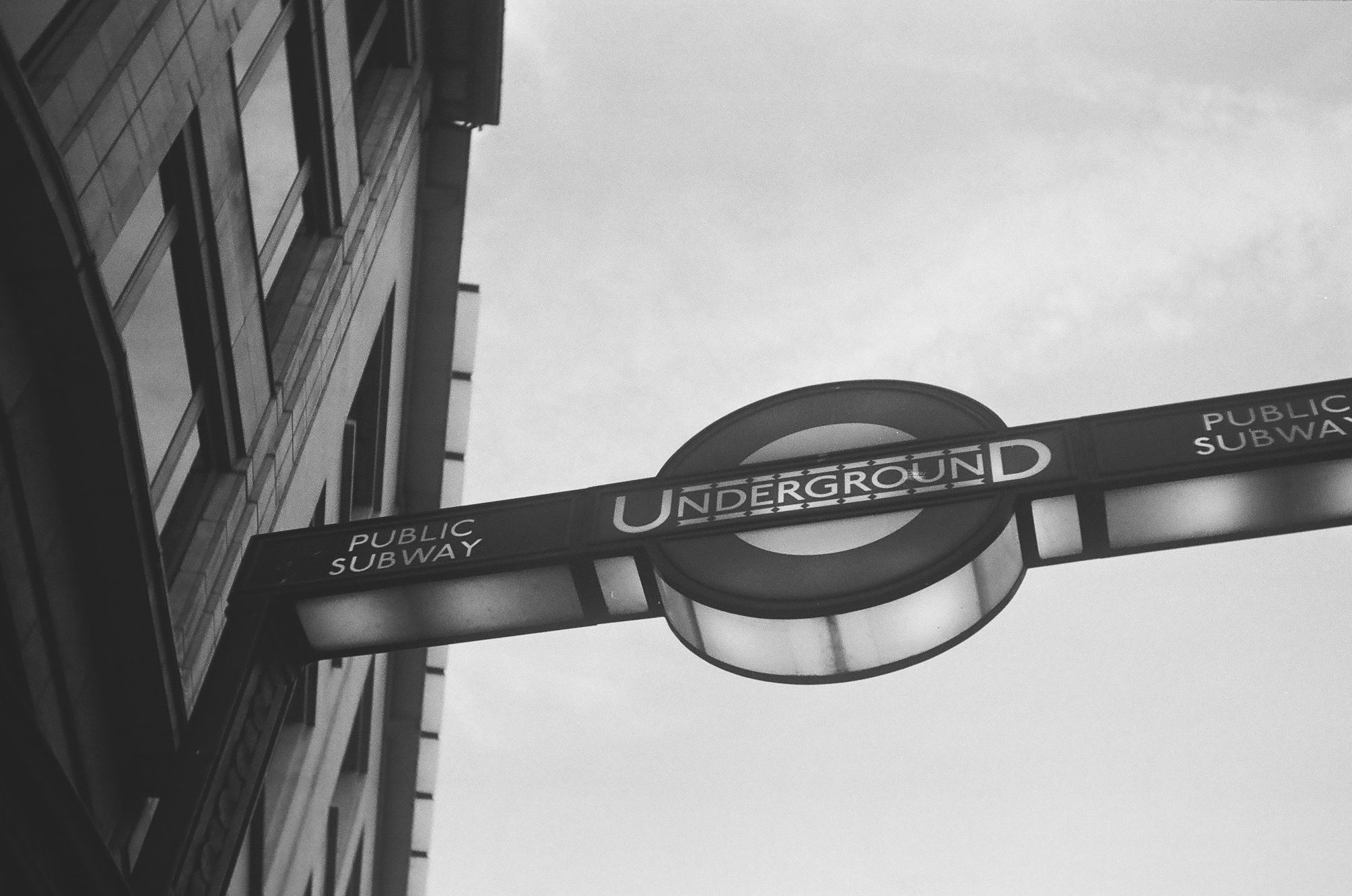
    Monument Station on King William Street. This sign signals the entrance to the subway linking Bank and Monument stations. These stations were linked in 1933, so this shot could have been taken the day this camera left the shop

    As a result, some images give a sense of timlessness. The fact that these images are shot on 35mm film only contributes to that feeling. It was in fact these 1930s “Barnack” Leica cameras, named after their inventor Oskar Barnack, which popularized the use of 35mm film for still photography. As digital cameras only became widely available after the fall of the Soviet Union, and film cameras hit peak sales as late as 1997, film has almost seventy years of relevance. Shooting with a film camera results in images which could plausibly range from the early 1930s until the early 2000s.

    St. Helen’s Place. Only the gentleman’s backpack and the Gherkin’s cameo in the top left betray this photo’s true age and break the temporal abiguity

    That temporal ambiguity leads to an instant nostalgia. Film photos, especially these ones with the imperfections of the Leica II, give a sense of a bygone era – despite being shot just a week prior. And that faux nostalgia is what gives film photography its magic. It’s an emotion intrinsic to the 35mm medium. While it’s possible to recreate that on digital, film grants it immediately and on demand.

    All three of these shots, taken during my morning commute, could have easily been shot on digital. But consider the soft focus of the 5cm lens, the way the film captures the light on the stonework or through the trees, the shaded haze of the Guy’s Hospital back alley – to me, that softness is more emotive than the harsh sharpness of digital photography.

    Borough Market. My ever-patient friends are waiting to the left for me to take the shot, one in frame facing the other just out of frame

    So yes, the age of this Leica II means it’s difficult to shoot. There’s a limited range of shutter speeds. Images are often over- or under-exposed. The lens is prone to light leaks and glare, and if you take the time to mitigate the above you’re likely to miss fast-moving moments. But when it all comes together, there’s a sense that the age of this camera is what makes it unique. I enjoyed shooting this camera because of how I felt taking a picture just as much as I enjoyed the pictures I took.

    Bermondsey Street

    I’m turning 26 next week, not 87 or 94. I’m not particularly worried about growing older, at least not yet – I have some time before existential dread really sets in. But the Leica II is comforting in showing that no matter how old you get, your idiosyncracies, and the way you make people feel, will still offer relevance in an ever-changing world.

    Photography Solves Everything

    Enzo Paganetti

    July 27, 2025
    Uncategorized

Create a website or blog at WordPress.com


Loading Comments...
 

    • Subscribe Subscribed
      • Thirty Six Thousand
      • Already have a WordPress.com account? Log in now.
      • Thirty Six Thousand
      • Subscribe Subscribed
      • Sign up
      • Log in
      • Report this content
      • View site in Reader
      • Manage subscriptions
      • Collapse this bar